Posts Tagged ‘workbench’
The Story of My Workbench
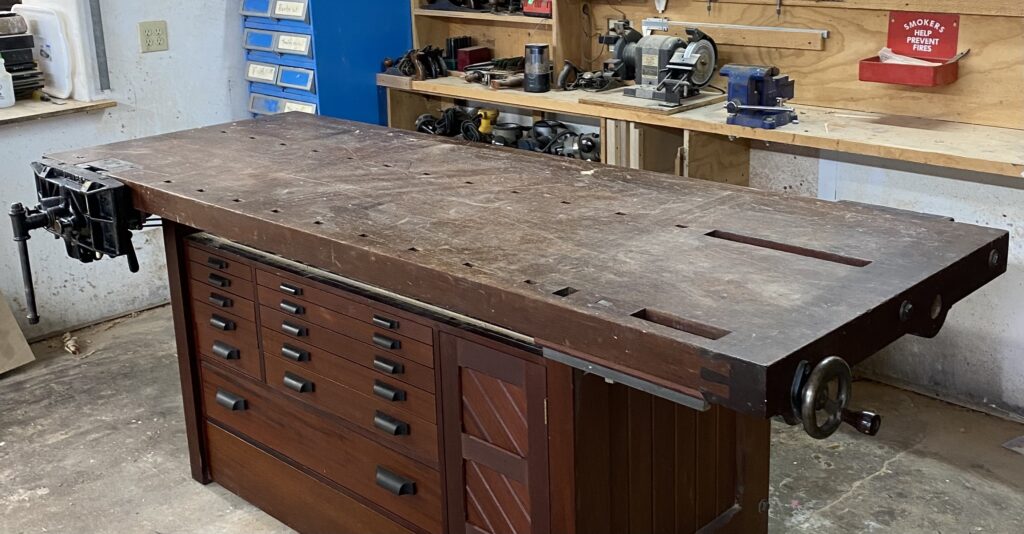
A workbench with a couple of vices is an essential tool when practicing traditional joinery. A workbench can be a simple plank bracketed to a wall, a serious piece of furniture, or anything in between.
I started building my bench about the time my son was born, 22 years ago. It’s close to completion.
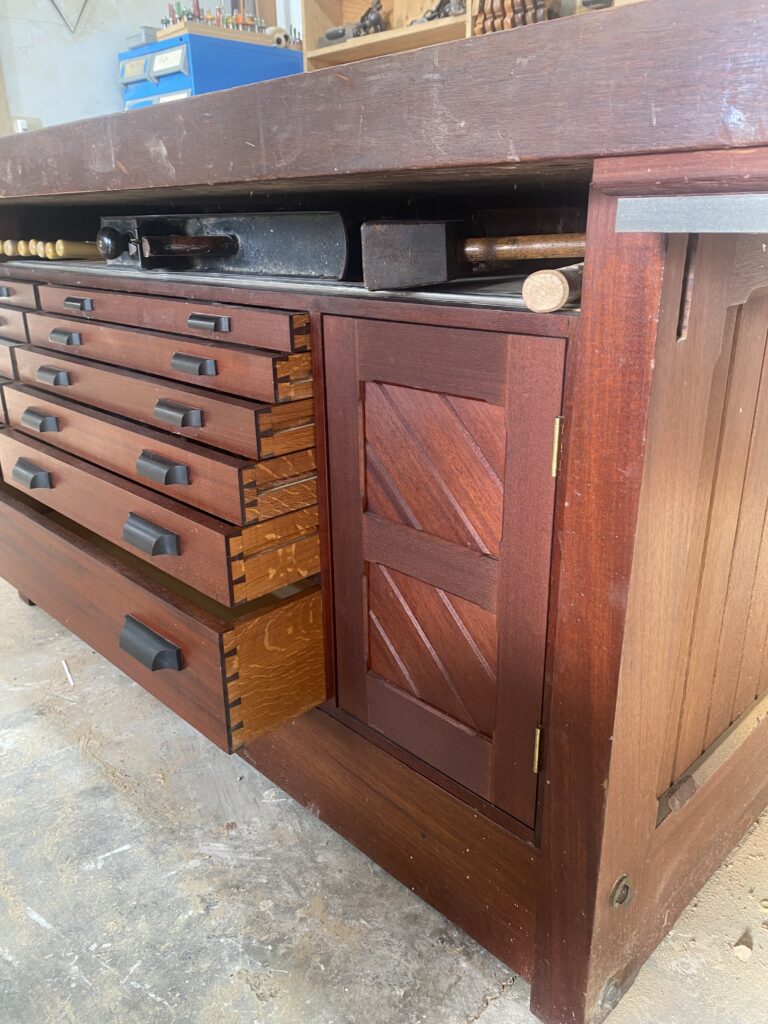
It’s made of South American pattern grade Mahogany with quarter sawn white oak drawer sides and ebony drawer pulls.
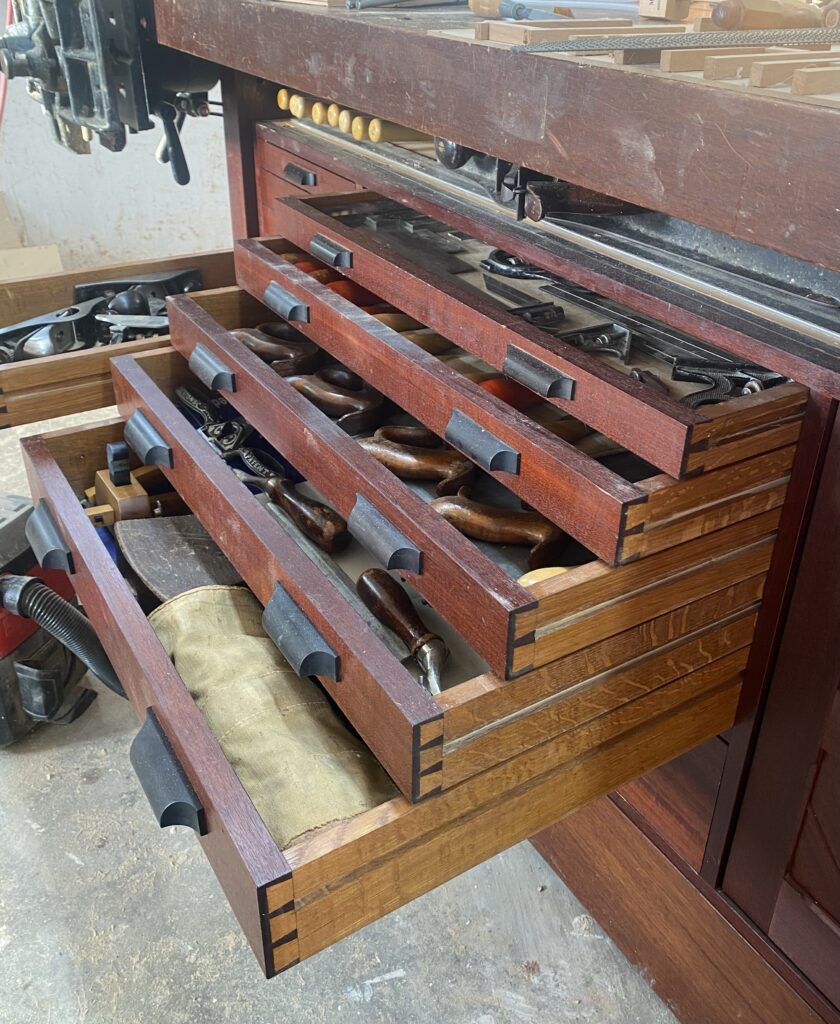
I’ve always liked a bench with drawers. Not only are my tools easily accessible to use, but they’re just as easy to put away, which helps keep my bench top free of clutter.
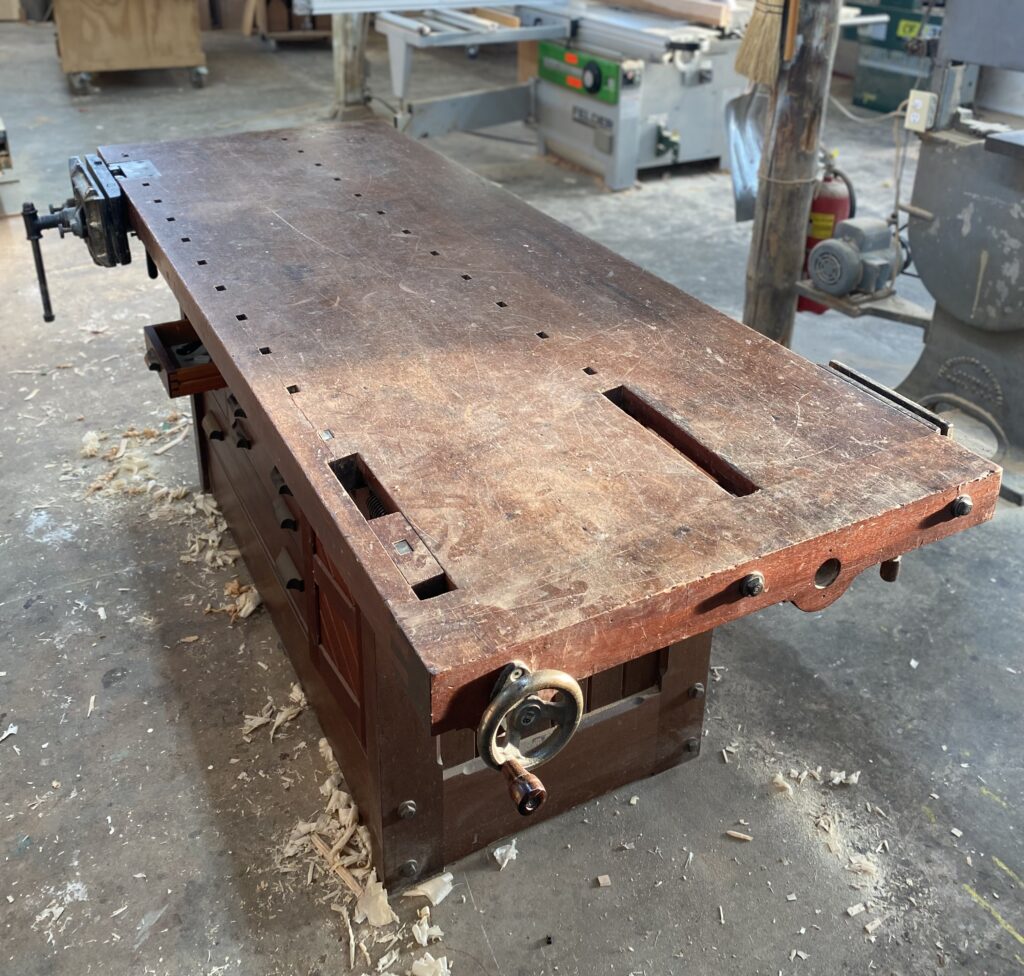
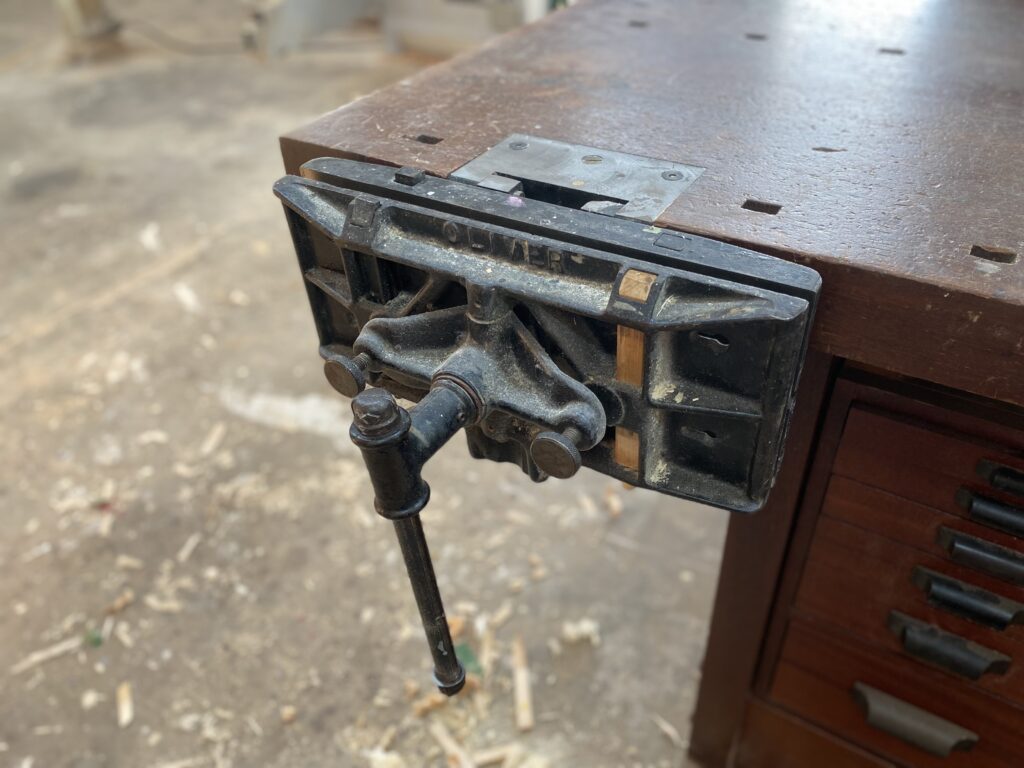
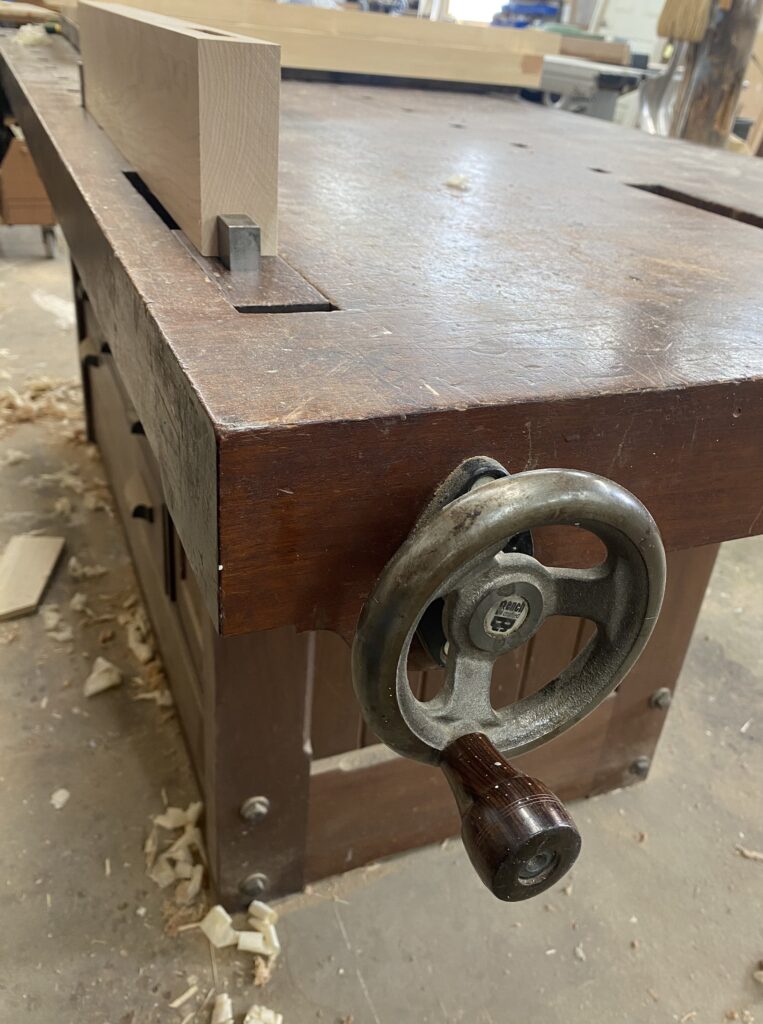
The bench top is the business end of any workbench. It wants to be solid and flat. With the Oliver pattern makers’ vice at one end and the Benchcrafter vice at the other end, I can securely hold all sizes and shapes up to seven feet in length.
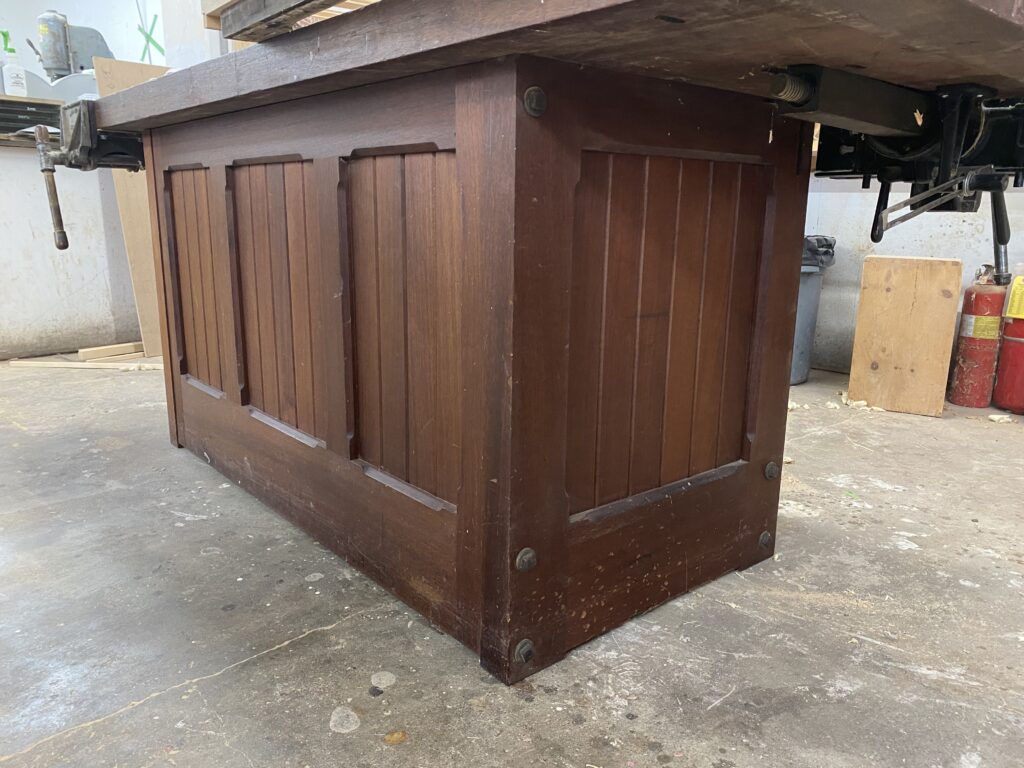
The base has four components, one back, two ends and the front rail which is a single 2″x8″ Mahogany plank, on which the tool box sits. Traditional joinery is used exclusively throughout this build. It features mortise and tenon joints with floating panels set in grooves for the base, as well as hand cut dovetails for the drawers. The back and the front rails have short “stub” tenons that fit into mortises cut into the ends. These four components, making up the base, are held tight with bolts.
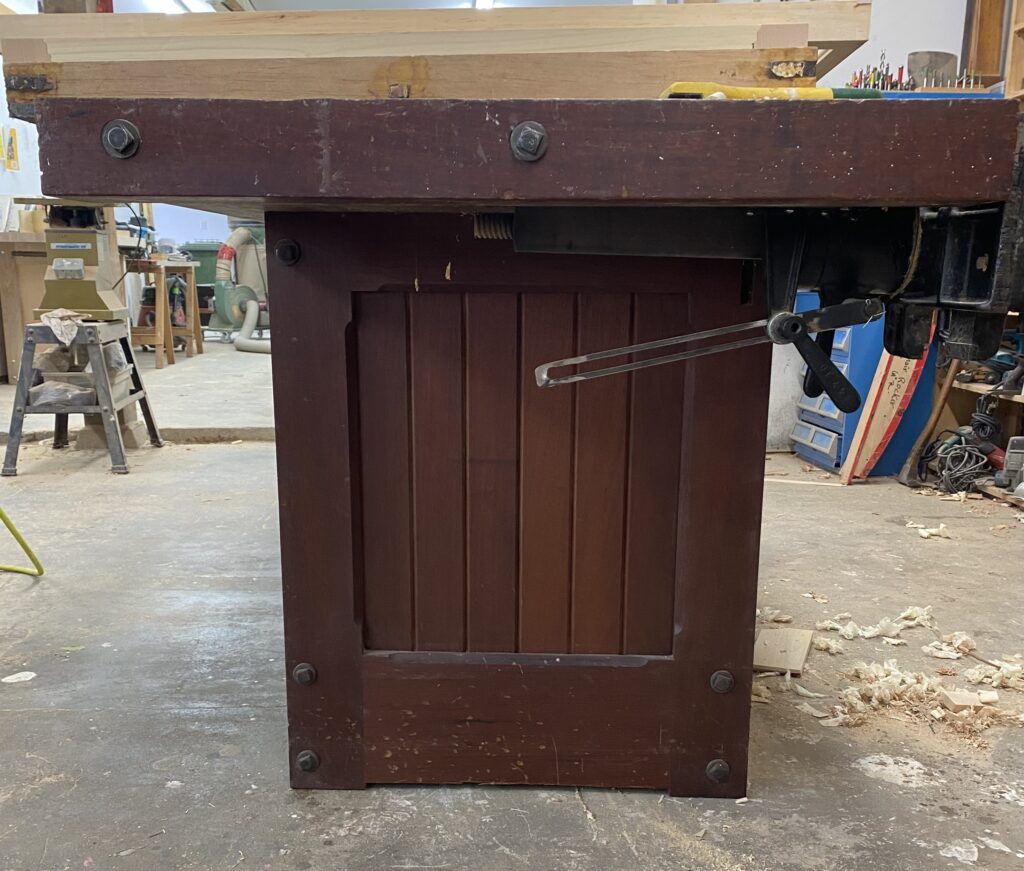
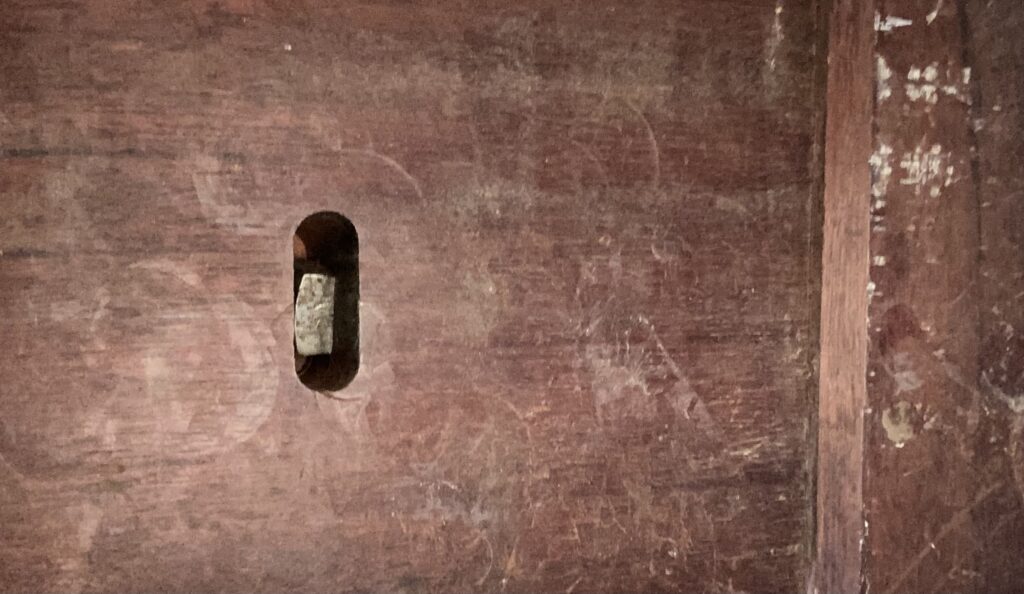
This brings me to my favourite design element…these old style, black iron, square headed bolts. I found these in the basement of a hundred year old hardware store in Upstate New York. The bolts tighten against nuts, let into slots, cut into the inside surfaces (seen in next photo). Not only is this a very strong joint, but it allows me to disassemble the bench.
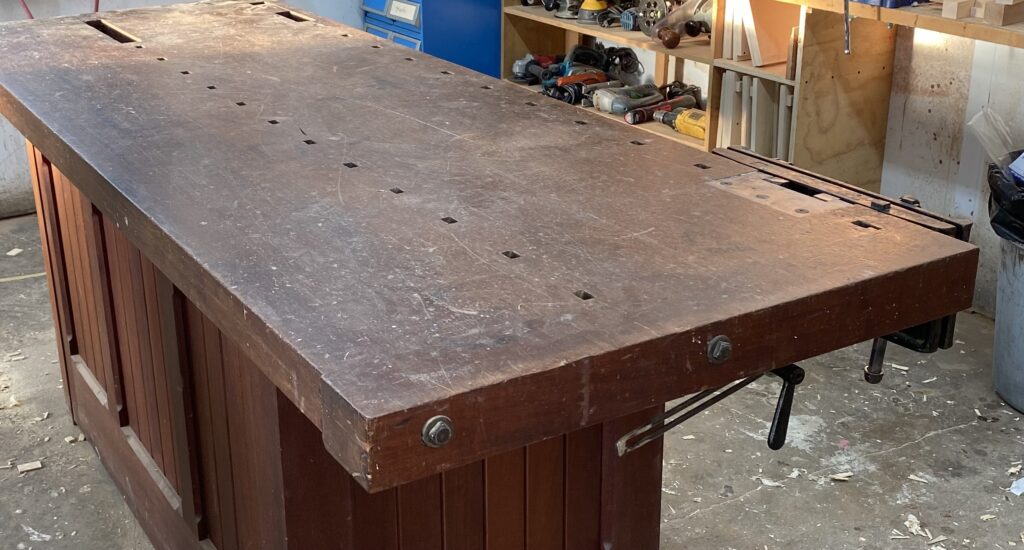
Wood is unstable dimensionally. It expands and contracts due to changes in the relative humidity in the air. In order to guarantee that my work surface stays flat I designed it with the following elements. The top is quarter sawn Mahogany, 2 7/8″ thick. Quarter sawn lumber is very stable due to the grain orientation. The 3 1/4″ perpendicular end cap acts as a stiffener.
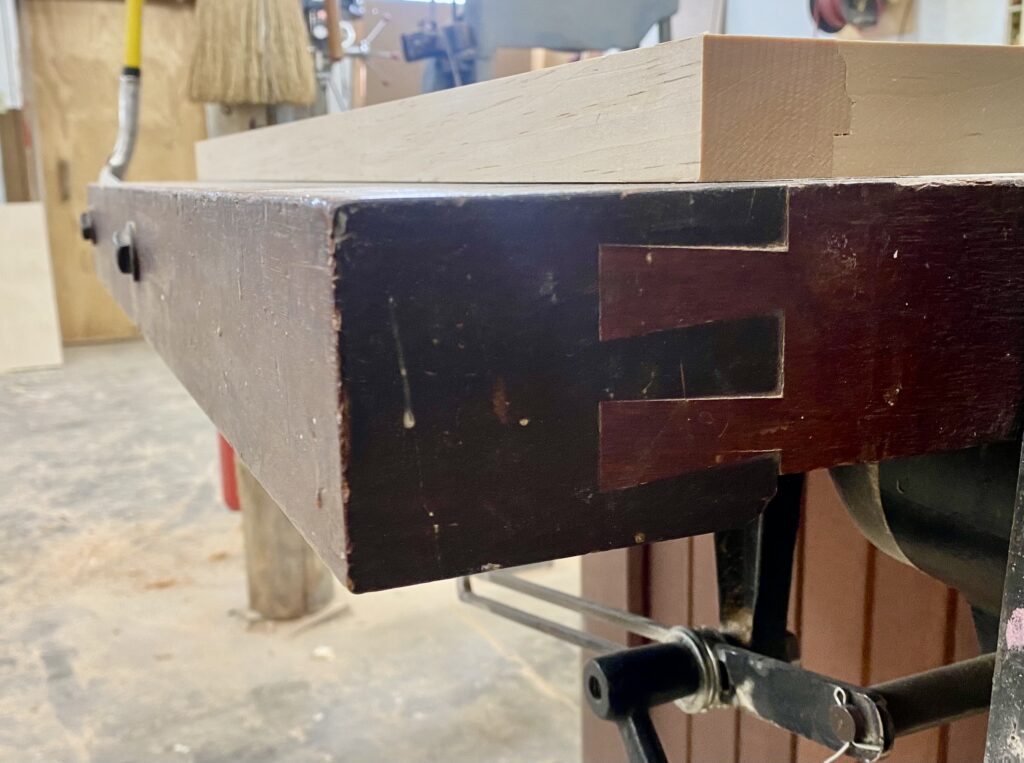
The front edge of the top is dovetailed and glued to the end caps for the first two inches only.
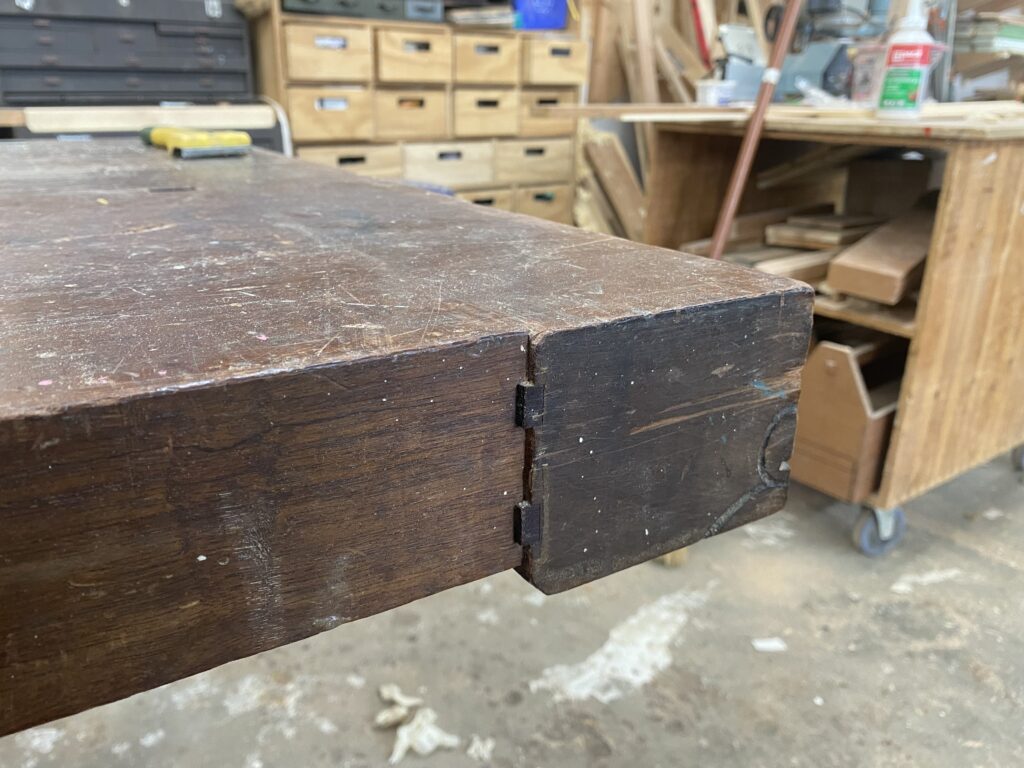
The remaining bench top is held tight to the end caps with two iron bolts that can slide on the double tongue and grooves. This allows the top to expand or contract with changes in the relative humidity. The bench top is as flat today as the the day it was built.
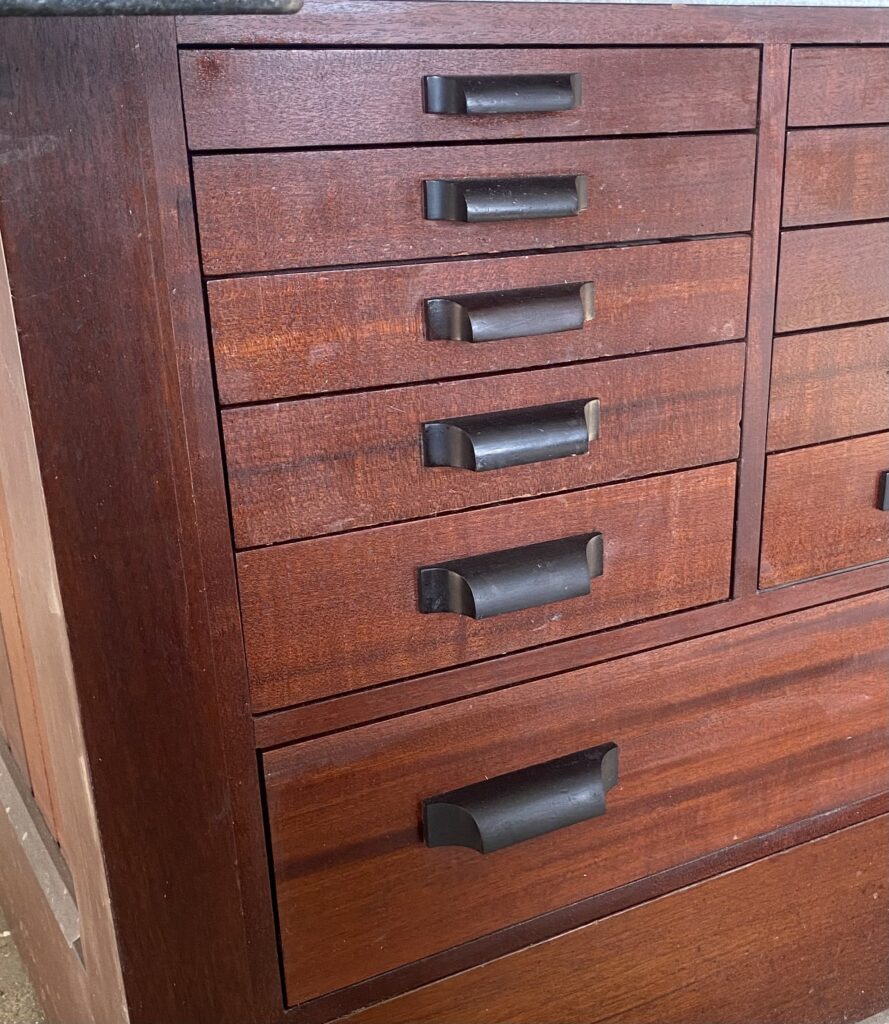
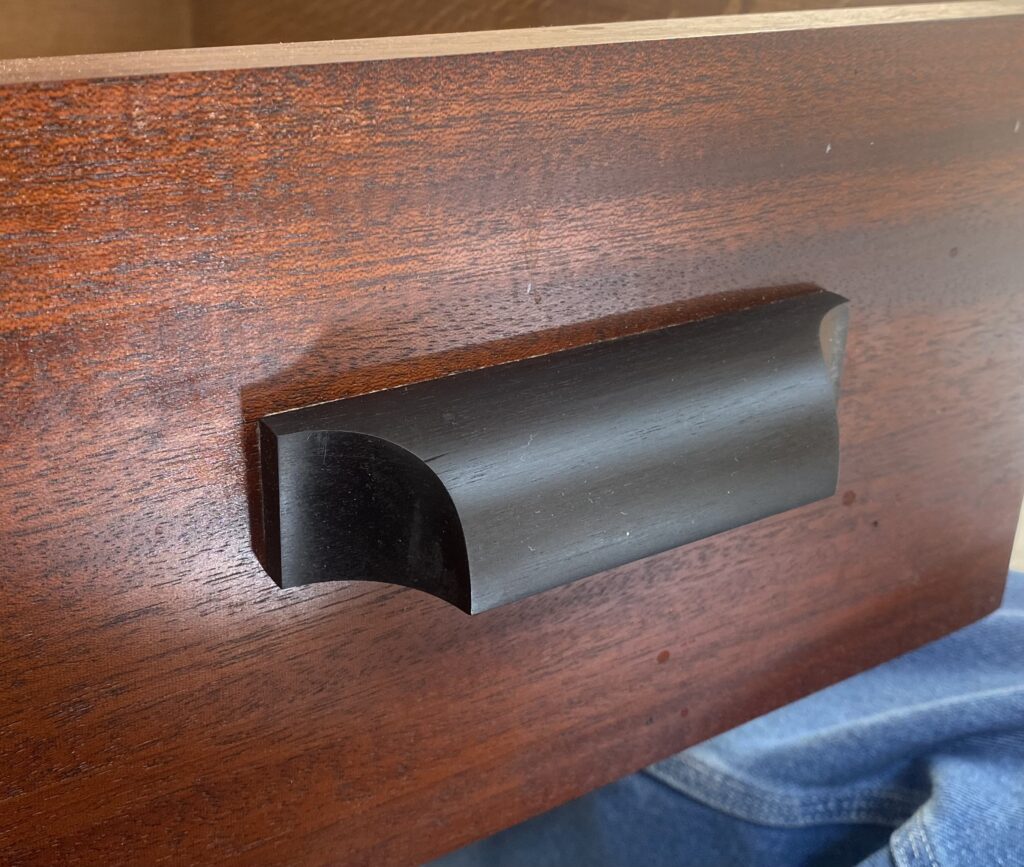
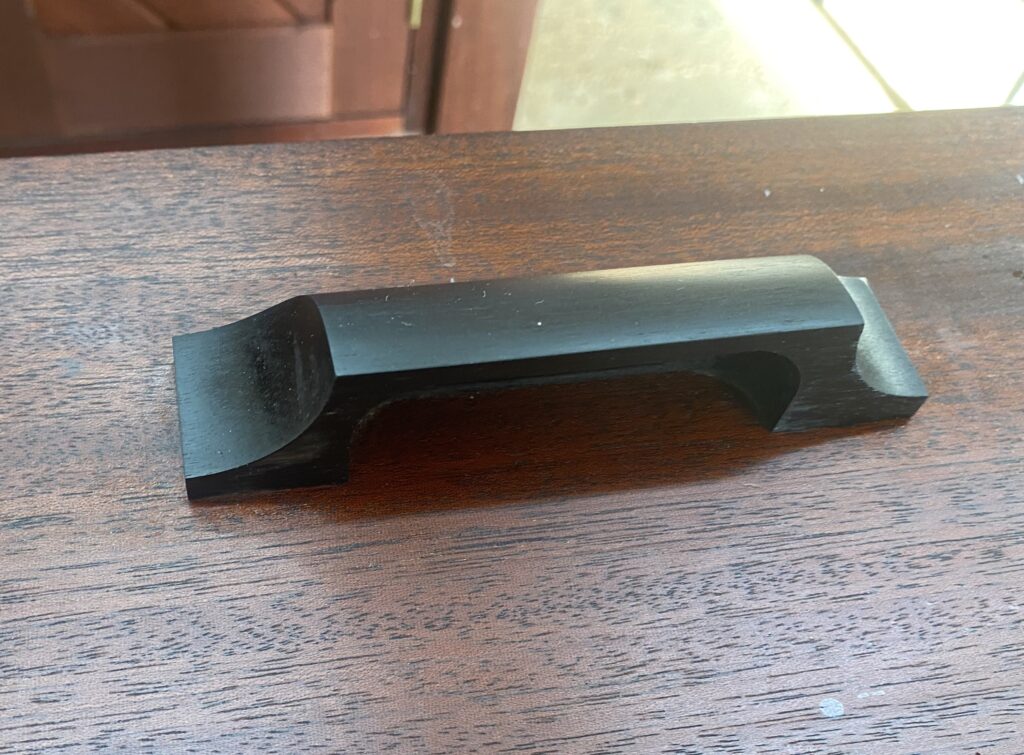
Finally, I made these pulls out of Ebony. They graduate from small to large as the drawers get wider.
I want to finish off by thanking a few good friend who gifted me the the exceptional materials that became my workbench. JohnLibby gave me my Oliver Pattern Maker’s Vice way back in the 1970s. I schlepped that heavy chunk of cast ironbound for decades.
In 2003, Anna, myself and the Oliver vice moved from Marblehead, MA to the Hudson Valley, NY. There, I had the pleasure of working for Dave Morton of Big tree Woodworks. Dave gave me the Mahogany and it was in his shop, working nights and weekends, than I built my bench.
In 2008, Anna, 4 year old Dustin, the workbench, the Oliver’s vice, and myself settled in Lunenburg, Nova Scotia. After working for a few years as a boat carpenter, I established the Lunenburg Furniture Co. in 2013, my bench had no drawers, just a shelf piled with off cuts. My friend, Chris Norman, master flute player/maker and founder of the Boxwood Festival gave me a box of ebony and boxwood offcuts. The ebony inspired the drawer pulls and the drawer pulls inspired me to design and build the tool box……which makes the bench, almost finished.
I hope you enjoyed my story. I work at the bench daily. It might be my finest work.